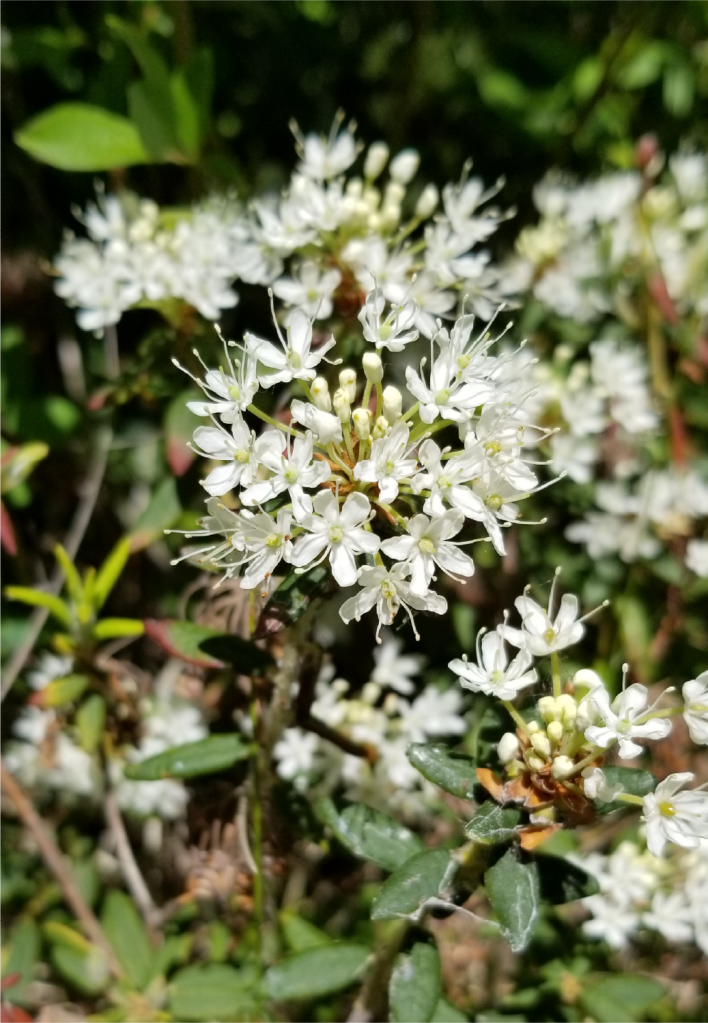
I identify as Indigenous. I think it is very important to thoughtfully incorporate human sides of research in addition to generating theories that contribute to research in any given field. In about 2014, my Grandma recalled stories of her Grandma delivering babies while using Métis medicines. Although I haven’t grown up with these traditions, I have since explored parts of my Métis culture with which I identify the most – continuously listening and learning. I learned about cultural plant medicines from elders Stella Blackbird and Audrey Bone in Keeseekowenin first nation during a week-long course (this community identifies closest with Anishinaabe cultures; co-organised with the University of Winnipeg). I am grateful for everyone’s warmth and eagerness to teach, especially after reconciling their colonial suffering before carrying on – while laughing – to help the next generation. This connecting with plants provided a glimpse into how my ancestors may have lived. It also helped me to see, a little bit, the perspectives of some Indigenous peoples, which I hope will help me be a respectful and empowering research partner!
In 2021, I listened to perspectives of some Indigenous peoples during Canadian colonisation in a full-day workshop – Indigenous Insights. During this learning opportunity, we discussed the Truth and Reconciliation Commission’s recommended actions and how we plan to take action. I plan to respectfully call out people during daily conversations, suggesting alternative actions and point them to opportunities to learn more.
I have been invited to speak at the annual Indigenous Summer Scholars Program (University of Winnipeg) between 2019-21. As a panel member, I shared my experiences as a graduate student to encourage undergraduate students identifying as Indigenous to pursue research opportunities. I want to use my privilege to share what I have learned, with curious students ambitious to reach their goals!
I am eager to continue learning about myself and from others.
References
1. Métis (Michif) and Anishinaabe (Anishinaabemowin) names from Belcourt, C. 2007. Medicines to help us: Traditional Métis plant use. Gabriel Dumont Institute, Saskatoon, Saskatchewan, Canada.
2. Latin name from Canadensys. 2020. Database of vascular plants of Canada [online]. Available from http://data.canadensys.net/vascan/search?lang=en [accessed 15 September 2021].
 Justis Henault